Quantitative Operando Raman Study of Li+-Intercalated Graphite
Aug 15, 2024· ·
1 min read
·
1 min read
James Faulkner
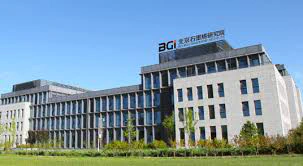 Image credit: Zhonguancun Science Park
Abstract
The Raman spectrum of graphene displays a distinctive dependance on charge carrier density (n) due to the non-adiabatic removal of the Kohn anomaly from the Γ point in the phonon dispersion and double resonance (DR) around the Dirac cones. Intercalation of Li+ between graphite layers is the key mechanism of energy storage in Li-ion batteries and, assuming perfect charge transfer, the stoichiometry of the fully intercalated state LiC6 corresponds to n = 6.36 x 1014 cm-2 based on unit cell volume. Previous electrochemical in-situ Raman studies have observed qualitative changes to the D, G and 2D modes during the intercalation process, but not provided a quantitative analysis. Here, we study the n dependance of the Raman spectrum of graphite. A semi-numerical model is developed to understand changes to the position of the G peak (ΔPos(G)) accounting for non-adiabatic corrections to density functional perturbation theory (DFPT) beyond the Dirac cones approximation, with an analytical model used to estimate scattering times from the full width at half maximum of the G peak (FWHM(G)) throughout all stages of Li+ intercalation. Electrochemical data are used to calculate n. These results offer new insight for understanding the Raman spectrum of graphite and the real-time formation of graphite intercalation compounds (GICs), paving the way for applications in Li-ion battery anodes and super-capacitors. This is achieved by providing new insight on ion diffusion and formation of the solid-electrolyte interphase (SEI): key parameters for benchmarking electrochemical performance and degradation.
Date
Aug 15, 2024 12:00 AM
Location
Beijing Graphene Institute
13 Cuihu Nanhuan Road, Beijing, 100095
Note
Click on the Slides button above to view the built-in slides feature.
Slides can be added in a few ways:
- Create slides using Hugo Blox Builder’s Slides feature and link using the
slidesparameter in the front matter of the talk file - Upload an existing slide deck to this page bundle and link it using
links: [{ type: slides, url: path/to/file } ]in front matter - Embed your slides (e.g. Google Slides) or presentation video on this page using shortcodes.
Further event details, including page elements such as image galleries, can be added to the body of this page.
